Treat uterine fibroids and their symptoms with uterine fibroid embolization (UFE):
A safe, effective, image-guided procedure that offers lasting relief and a faster recovery compared to surgical options.

A safe, effective, image-guided procedure that offers lasting relief and a faster recovery compared to surgical options.
Uterine fibroids are benign (non-cancerous) tumors of the uterus, ranging in size from as small as a grape to as large as a cantaloupe, that can cause heavy periods, painful periods, urinary difficulties, bloating, and abdominal and pelvic pain.
Uterine fibroids are common, affecting 20-40% of all women over age 35. The incidence is significantly higher in Black women, with studies showing that 80% of Black women will develop fibroids by age 50. Additionally, Black women tend to develop fibroids at an earlier age, experience more severe symptoms, and have larger and more numerous fibroids.
UFE is a minimally invasive and highly effective outpatient approach for treating fibroids that does not require traditional treatment options such as hormone treatment, hysterectomy (surgical removal of the uterus), or myomectomy (surgical removal of fibroids).

Fibroids are a common cause of heavy or long periods, but they aren’t the only one. Other possible causes include:
Before recommending UFE, your doctor will review imaging such as a pelvic ultrasound or MRI to confirm that fibroids are causing your symptoms. In some cases, additional tests may be needed first to rule out other conditions.

UFE may not be the best choice for all patients. Your doctor can help you decide which treatment may be right for you.
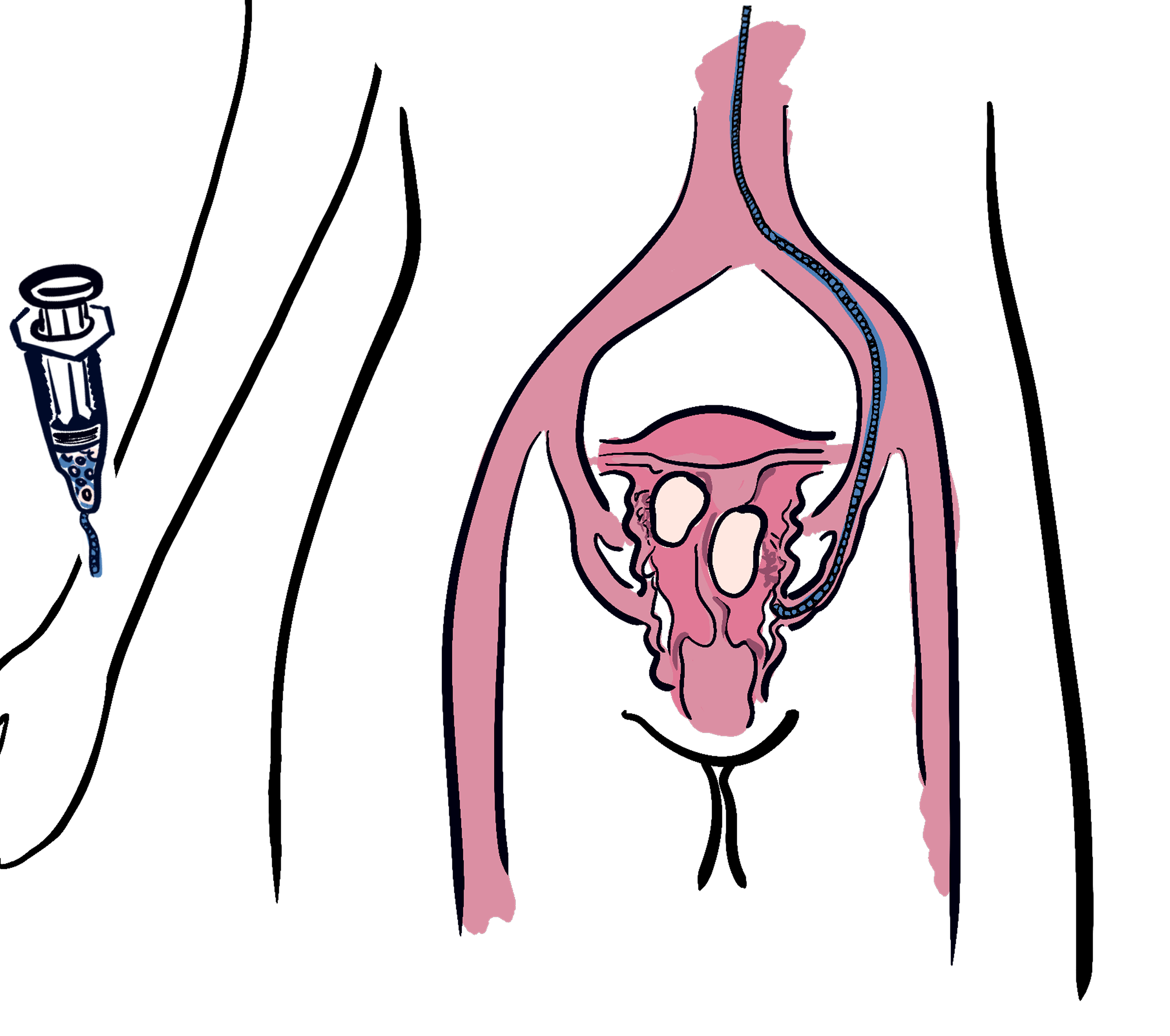
During uterine fibroid embolization (UFE), an interventional radiologist uses imaging to guide a thin catheter through your blood vessels to the arteries that supply the fibroids. Tiny particles called microspheres are released into those arteries. They settle in the small vessels feeding the fibroids and cut off their blood supply. Without that blood flow, the fibroids shrink and symptoms ease.
The procedure usually takes less than an hour and needs only a small nick in the skin. Most patients go home the same day. Studies show that women who have UFE report high satisfaction and lasting improvements in quality of life.¹ ² An analysis of four randomized clinical trials found that, compared with surgery, UFE involved less blood loss, a shorter hospital stay, and a quicker return to work.³
1. Smith WJ, Upton E, Shuster EJ, Klein AJ, Schwartz ML. Patient satisfaction and disease specific quality of life after uterine artery embolization. Am J Obstet Gynecol. 2004;190(6):1697–1703.
2. Scheurig-Muenkler C, Koesters C, Powerski MJ, Grieser C, Froeling V, Kroencke TJ. Clinical long-term outcome after uterine artery embolization: sustained symptom control and improvement of quality of life. J Vasc Interv Radiol. 2013;24(6):765–771.
3. van der Kooij SM, Bipat S, Hehenkamp WJ, Ankum WM, Reekers JA. Uterine artery embolization versus surgery in the treatment of symptomatic fibroids: a systematic review and metaanalysis. Am J Obstet Gynecol. 2011;205(4):317.e1–317.e18.
UFE has been performed for decades, yet many women with fibroids are only offered medication or surgery. That’s often because UFE is performed by interventional radiologists, specialists who treat conditions from inside the blood vessels using imaging, rather than by the gynecologists and surgeons women usually see first.
You deserve to know all of your options before making a decision about your uterus. If you’ve been told a hysterectomy is your only choice, a consultation with an interventional radiologist can help you understand whether UFE could work for you.

There’s no single right treatment for everyone. Here’s how the most common options compare.
Watchful waiting and medication
If your symptoms are mild, monitoring may be enough. Hormonal treatments and other medications can reduce bleeding, but they don’t remove fibroids, and symptoms often return when medication stops.
Myomectomy
Myomectomy is surgery to remove the fibroids while keeping the uterus. It’s often recommended for women who want to become pregnant. Recovery depends on the approach, and new fibroids can grow afterward.
Hysterectomy
Hysterectomy removes the uterus and permanently ends fibroid symptoms, but it’s major surgery. It usually requires a hospital stay, and recovery can take six to eight weeks.
Uterine fibroid embolization (UFE)
UFE treats all fibroids at once without surgery and lets you keep your uterus. It’s an outpatient procedure, and most women are back to their normal routine in one to two weeks.

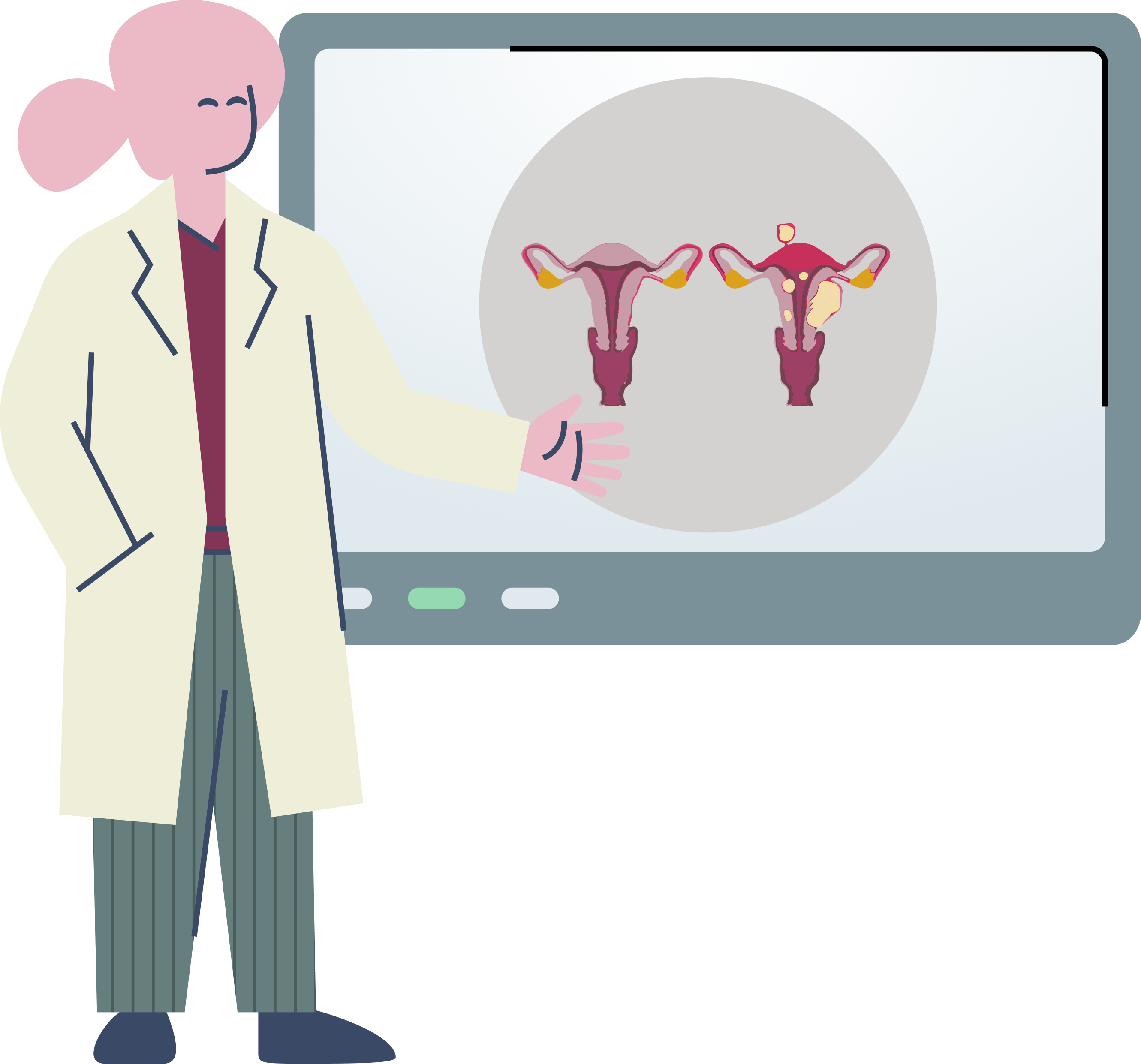
Fibroids are named for where they grow in the uterus, and their location affects which symptoms they cause. Many women have more than one type.
UFE treats all of the fibroids in the uterus at the same time, whatever their type or size. Your doctor will review your imaging to confirm that UFE is a good fit for your specific fibroids.
Cramping is common for the first day or two after UFE, and some women also have nausea, a low-grade fever or tiredness for several days as the fibroids begin to shrink. This is expected and is managed with medication.
Most women return to work and normal activities within one to two weeks. Heavy bleeding often improves within the first few menstrual cycles, and fibroids continue to shrink over the following months, so pressure and bulk symptoms keep getting better over time.

Your first visit is a conversation, not a commitment. Your doctor will review your symptoms, medical history and any imaging you’ve had. If you haven’t had a recent pelvic ultrasound or MRI, we may order one, since imaging shows the size, number and location of your fibroids and helps confirm whether UFE is a good option.
We’ll walk you through every treatment option, including the ones we don’t perform. If another treatment is a better fit for you, we’ll tell you and help you find the right next step.
“This was such an Amazing visit. Everyone was kind, patient and explained throughly the details of the procedure. Natalie was especially thoughtful and very detailed about what steps my husband and I needed to take prior to our procedure. 10 out of 10. Highly Recommend”
“Dr. Foulard was excellent—friendly, patient, and very easy to talk to. He really listened, took my concerns seriously, and explained everything clearly without rushing. I left feeling heard, reassured, and confident in the plan. Highly recommend.”
“My experience was very good. Dr. Foulard was a God send. Him and his staff were caring and supportive. Thank you for the confidence you gave me.”
Rated 5.0 on Google and 5.00 on Zocdoc. Reviews are shown as written by patients.
Liberty Medical offers uterine fibroid embolization at our outpatient office in Manhattan’s Financial District. Your procedure is performed by a board-certified interventional radiologist, and our team is happy to coordinate with your primary care doctor or gynecologist.
Our team of specialists is on hand to answer your questions. Give us a call at 718-866-4435 or complete the form, and we'll be in touch as soon as possible.