Hemorrhoidal artery embolization (HAE) can effectively treat bothersome hemorrhoids and their symptoms.

Compared to surgery, this image-guided procedure provides lasting relief and a quicker recovery, all while being safe, effective, and virtually pain-free.

Stop hemorrhoid bleeding without surgery

Around 50% of all Americans will suffer from hemorrhoids at some point. When traditional treatments are ineffective, hemorrhoids can become chronic, leading to bleeding, itching, and painful bowel movements. This chronic condition can also result in further complications like blood clots, infection, and tissue damage.

Hemorrhoidal artery embolization (HAE) offers a new, minimally invasive approach to treating hemorrhoids. This safe and effective treatment provides results comparable to surgery, with the added benefits of significantly less discomfort and a faster recovery period.

A graphic of doctors talking to a patient.

Hemorrhoid Grades and Who HAE Can Help

Doctors grade internal hemorrhoids from 1 to 4 based on whether they slip out of the anus (prolapse) and whether they go back in:

Grade 1: stays inside and does not prolapse.
Grade 2: prolapses during a bowel movement, then goes back in on its own.
Grade 3: prolapses and has to be pushed back in by hand.
Grade 4: stays outside and can’t be pushed back in.

HAE is designed for grade 1 to 3 internal hemorrhoids, and it works especially well when bleeding is the main symptom. Grade 4 hemorrhoids usually need surgery, and if that’s the right choice for you, we’ll refer you. Many people aren’t sure which kind or grade they have, and that’s fine. A short exam at your consultation answers that question.

Understanding Hemorrhoids: Internal vs. External

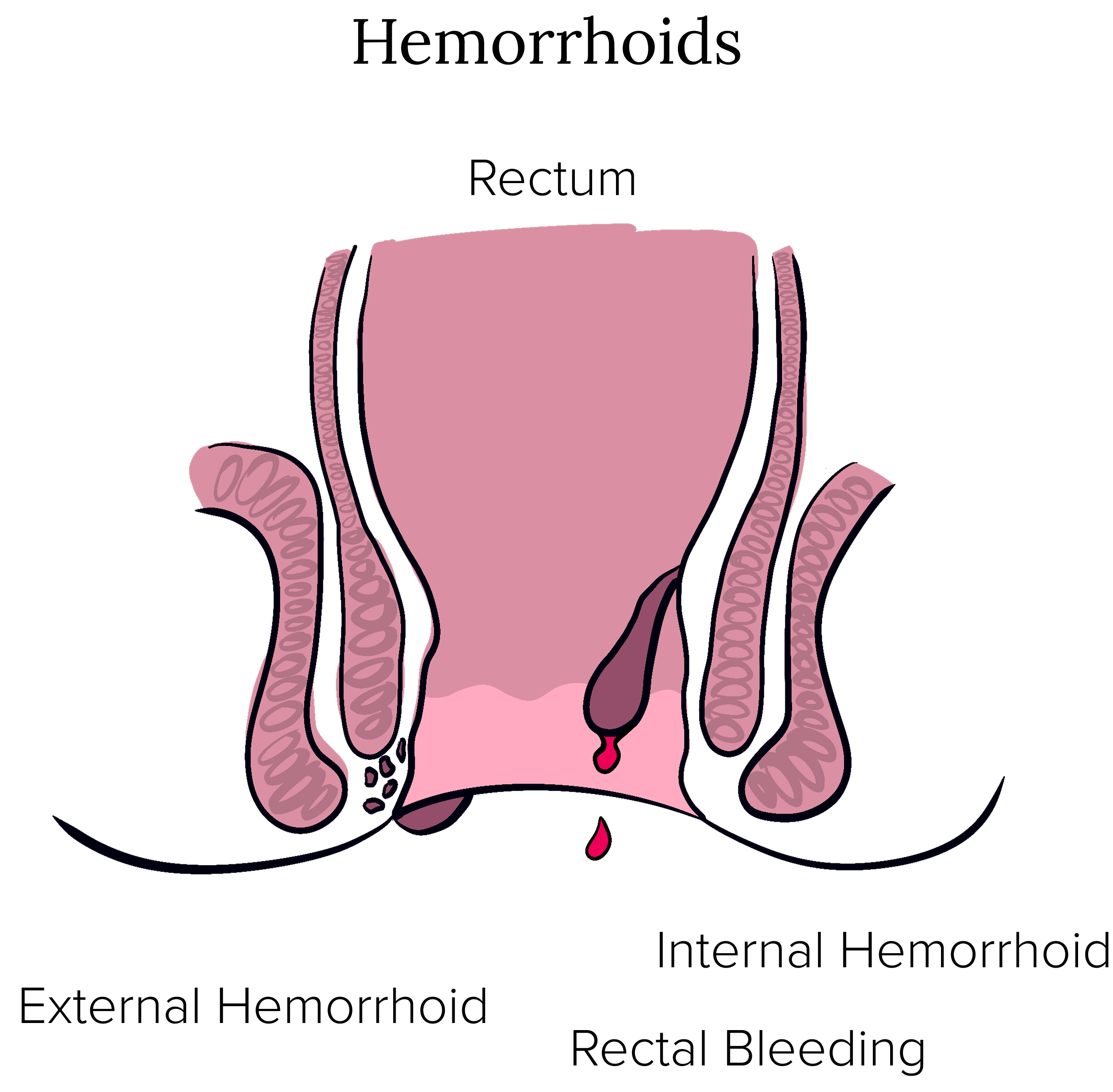
Everyone can have hemorrhoids. They’re normal cushions of blood vessels in the anal canal that help with bowel control, and they only cause problems when they become swollen and inflamed.

Internal hemorrhoids

Internal hemorrhoids form inside the rectum, in an area with very few pain nerves. That’s why the most common sign is bright red blood on the toilet paper or in the bowl, often with little or no pain. They can also stretch and slip outside the anus. Internal hemorrhoids are the type HAE treats.

External hemorrhoids

External hemorrhoids form under the skin around the anus, where there are many pain nerves, so they tend to hurt, itch and swell. They have a different blood supply, so HAE doesn’t treat them. Many people have both types, which is one reason an exam matters before choosing a treatment.

Book an appointment
Talk to a Specialist
A person's lower back.

Benefits of Hemorrhoidal artery embolization (HAE)

Less invasive
Entirely outpatient - no overnight stay in the hospital required
High technical success rate (ranging between 90% and 100%)
No scarring
Quick recovery
Studies consistently report no serious complications

What Causes Hemorrhoids?

Most hemorrhoids develop when the veins in the anal cushions are under repeated or long-lasting pressure. Common contributors include:

  • Constipation or frequent diarrhea: straining to pass hard stool and frequent loose stools both irritate and stretch the tissue.

  • Straining and heavy lifting: bearing down, whether on the toilet or while lifting at work or the gym, raises pressure in these veins.

  • Long stretches on the toilet: the seat leaves the area unsupported, so the cushions fill with blood. Scrolling on your phone for 10 minutes several times a day adds up.

  • Sitting for hours: drivers, desk workers and anyone seated most of the day are at higher risk.

  • Pregnancy and childbirth: pressure in the pelvis, hormonal changes and pushing during delivery all play a role.

  • Age: the tissue that holds the cushions in place weakens over time.

A photo of a toilet.

The hemorrhoidal artery embolization (HAE) procedure

During HAE, an interventional radiologist places a thin catheter into an artery in your wrist. Using X-ray guidance, the doctor steers it through your blood vessels to the arteries that feed the hemorrhoids. Small coils are then placed in those arteries to reduce the blood flow to the hemorrhoids, which causes them to shrink.

HAE doesn’t require general anesthesia, incisions, or stitches, so there’s no scarring. You go home the same day and can get back to your normal routine quickly.

A drawing of external hemorrhoids.

When should you Consider HAE?

Hemorrhoidal artery embolization (HAE) offers a new, minimally invasive approach to treating hemorrhoids. This safe and effective treatment provides results comparable to surgery, with the added benefits of significantly less discomfort and a faster recovery period.

A person with their hands behind their back.

Key symptoms and situations that typically call for treatment include...

Persistent bleeding despite banding
Prolapse
Discharge or soiling
Sensation of incomplete evacuation after bowel movements
Pain or discomfort

Rectal Bleeding: When It May Not Be Hemorrhoids

Bright red, painless bleeding is the typical hemorrhoid pattern, but other conditions can cause rectal bleeding too:

  • Anal fissure: a small tear in the lining of the anus that causes sharp pain during and after bowel movements.

  • Colon polyps or colorectal cancer: warning signs include darker blood mixed into the stool, a lasting change in bowel habits, unexplained weight loss or anemia, a family history of colorectal cancer, or being overdue for screening.

  • Inflammatory bowel disease and other causes: ongoing diarrhea, mucus, urgency, belly pain or fever can point to Crohn’s disease, ulcerative colitis or other conditions.

Never assume bleeding is just hemorrhoids. If you haven’t had a recent colonoscopy, or your symptoms have changed since your last one, you may need one before treatment so more serious causes can be ruled out. We can help you get it scheduled.

A person sitting in a chair holding their lower back.

A Private, Comfortable Consultation

Many people put off getting help for hemorrhoids for years because they dread the exam. At Liberty Medical, your consultation is a conversation about your symptoms and history, followed by a brief, private exam that takes only a few minutes. Our team does this every day, and it’s handled like any other part of routine medical care.

If HAE isn’t the right fit for you, we’ll tell you and point you toward the treatment that is, including a referral to a surgeon when that’s the best option.

Book an appointment
Talk to a Specialist
A graphic of a doctor talking to a patient.

Recovery After HAE

Most patients go home the same day and stick to light activity for the first day or two before returning to their normal routine. Because nothing is cut, there’s no wound to care for and no painful first bowel movement afterward.

Some patients feel rectal pressure or an urge to use the bathroom for two to three days. This is temporary and is usually managed with over-the-counter pain relievers. Bleeding often improves within one to two weeks, and other symptoms continue to improve over four to six weeks.

A family of four going to the beach.

What Our Patients Say

“Dr. Foulard was excellent—friendly, patient, and very easy to talk to. He really listened, took my concerns seriously, and explained everything clearly without rushing. I left feeling heard, reassured, and confident in the plan. Highly recommend.”

Grainne N., Zocdoc review

“Love the way Dr. Foulard concerns about his patients health condition. He takes time with his patients to understand. He’s very thorough about everything before he does any procedures. The staff is amazing. I am very satisfied.”

Leighton B., Google review

“My experience was very good. Dr. Foulard was a God send. Him and his staff were caring and supportive. Thank you for the confidence you gave me.”

Daphne P., Google review

Rated 5.0 on Google and 5.00 on Zocdoc. Reviews are shown as written by patients.

Ready to talk?

HAE in New York City

Liberty Medical offers HAE at our outpatient office in Manhattan’s Financial District. Talk to a doctor today to learn more.

Talk to a doctor to find out if HAE is right for you.

Our team of specialists is on hand to answer your questions. Give us a call at 718-866-4435 or complete the form, and we'll be in touch as soon as possible.

Thank you! Your submission has been received!
Oops! Something went wrong while submitting the form.